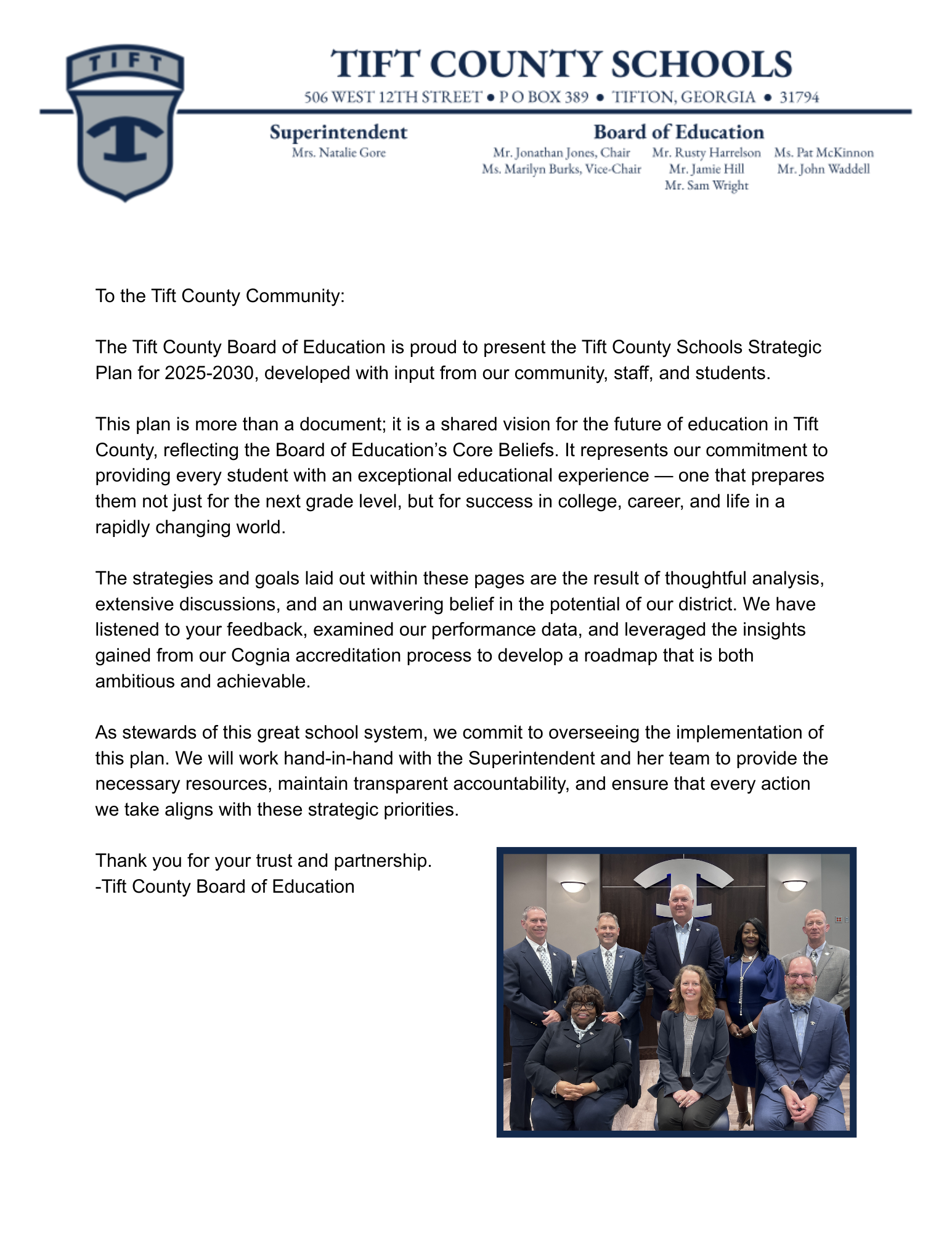
- Letter from Board of Education
-
Letter from Superintendent
|
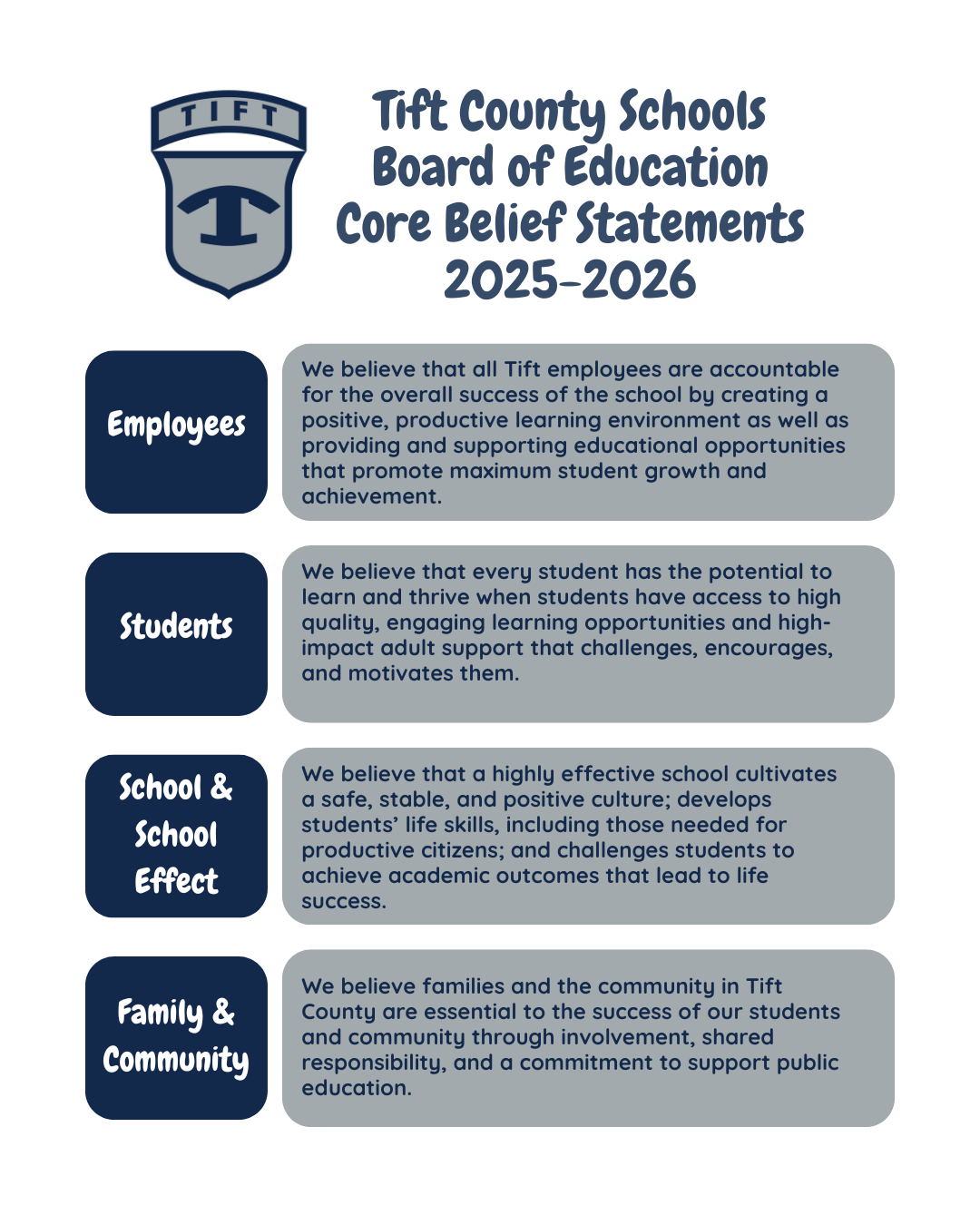
- Board of Education Core Beliefs
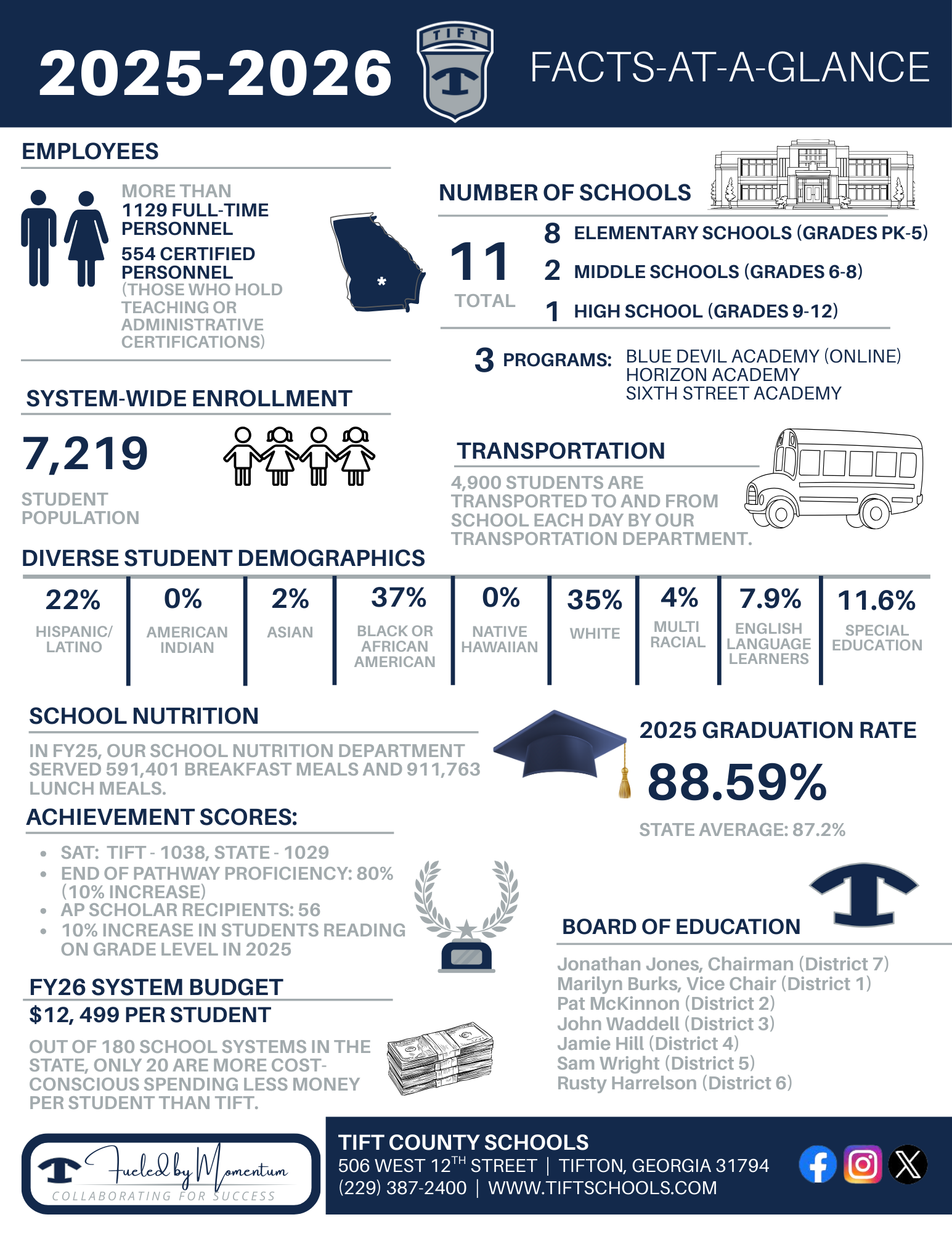
- Tift By the Numbers
|
- Phase 1: Stakeholder Survey
- Phase 2: Internal Performance Analysis
- Phase 3: Environmental Scan
- Phase 4: Synthesis and Plan Drafting
- Phase 5: Stakeholder Review for Final Input
- Phase 6: Integration of Cognia Final Report recommendations
|
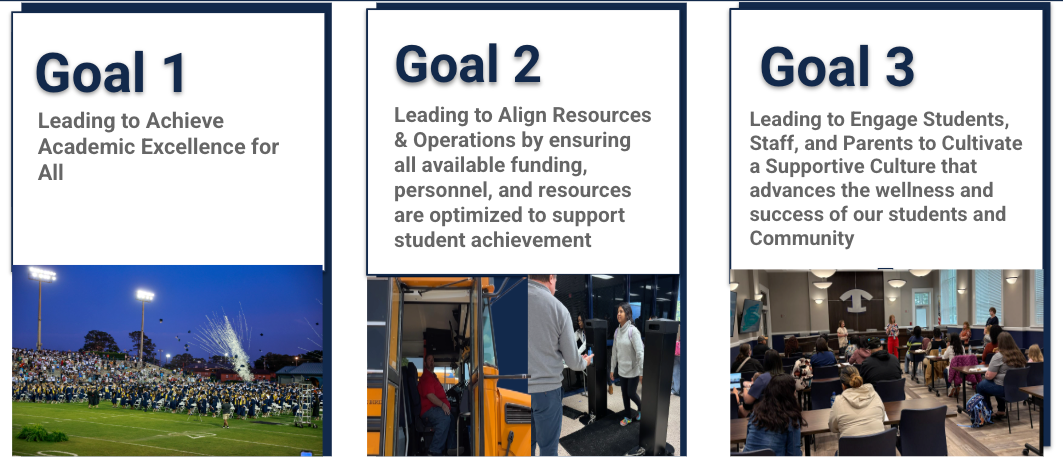
- Goal 1: Leading to Achieve Academic Excellence for All
-
Goal 2: Leading to Align Resources & Operations by ensuring all available funding, personnel, and resources are optimized to support student achievement
- Goal 3: Leading to Engage Students, Staff, and Parents to cultivate a Supportive Culture that advances the wellness and success of our students and community
|
Measures of Success: Key Performance Indicators Leading a Culture of Continuous Improvement Organizational Alignment: From the Boardroom to the Classroom Strategic Plan Monitoring & Reporting Year 1 Focus Tactics and Key Performance Indicators (2025-2026) |
- Goal 1: Leading to Achieve Academic Excellence for All
-
Goal 2: Leading to Align Resources & Operations by ensuring all available funding, personnel, and resources are optimized to support student achievement
- Goal 3: Leading to Engage Students, Staff, and Parents to cultivate a Supportive Culture that advances the wellness and success of our students and community
- Tift County School’s Key Performance Indicators of Focus for 2025-2026
|
With Gratitude
Glossary of Terms |
In 2025, the Tift County School's Board of Education collaboratively established the following Core Beliefs. These beliefs serve to unify the Board and provide guiding principles to focus and center the actions of both the Board and the school system. |
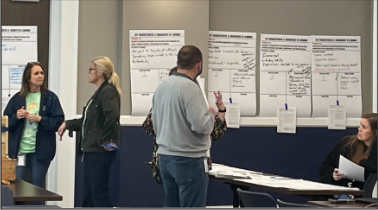
Developing the Plan: Collaboration and Input |
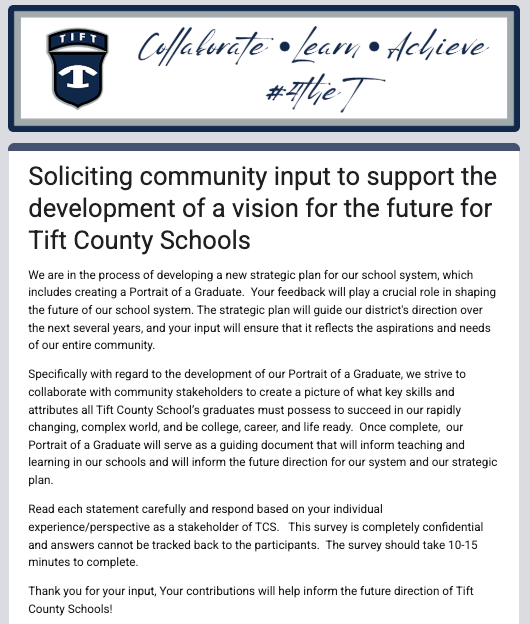
Phase 1: Stakeholder Survey (Fall 2024) |
The process of information gathering for the Strategic Plan 2025-2030 began in the Fall of 2024 with a comprehensive Stakeholder Survey, which gathered over 400 stakeholder responses. This survey was designed not merely to gauge satisfaction but to harvest rich input across several dimensions: |
|
|
Current Strengths: Identifying the most effective programs, successful initiatives, and positive attributes of the school system. Areas of Need: Pinpointing critical deficiencies, resource gaps, and systemic challenges that require immediate strategic attention.
Potential Opportunities for Growth: Exploring innovative ideas, emerging educational trends, and untapped resources that could propel the system forward. Essential Graduate Qualities: Defining the core competencies, skills, and character traits that the community expects every Tift County Schools graduate to possess upon commencement. |
| |
|
Phase 2: Internal Performance Analysis (Winter 2025) |
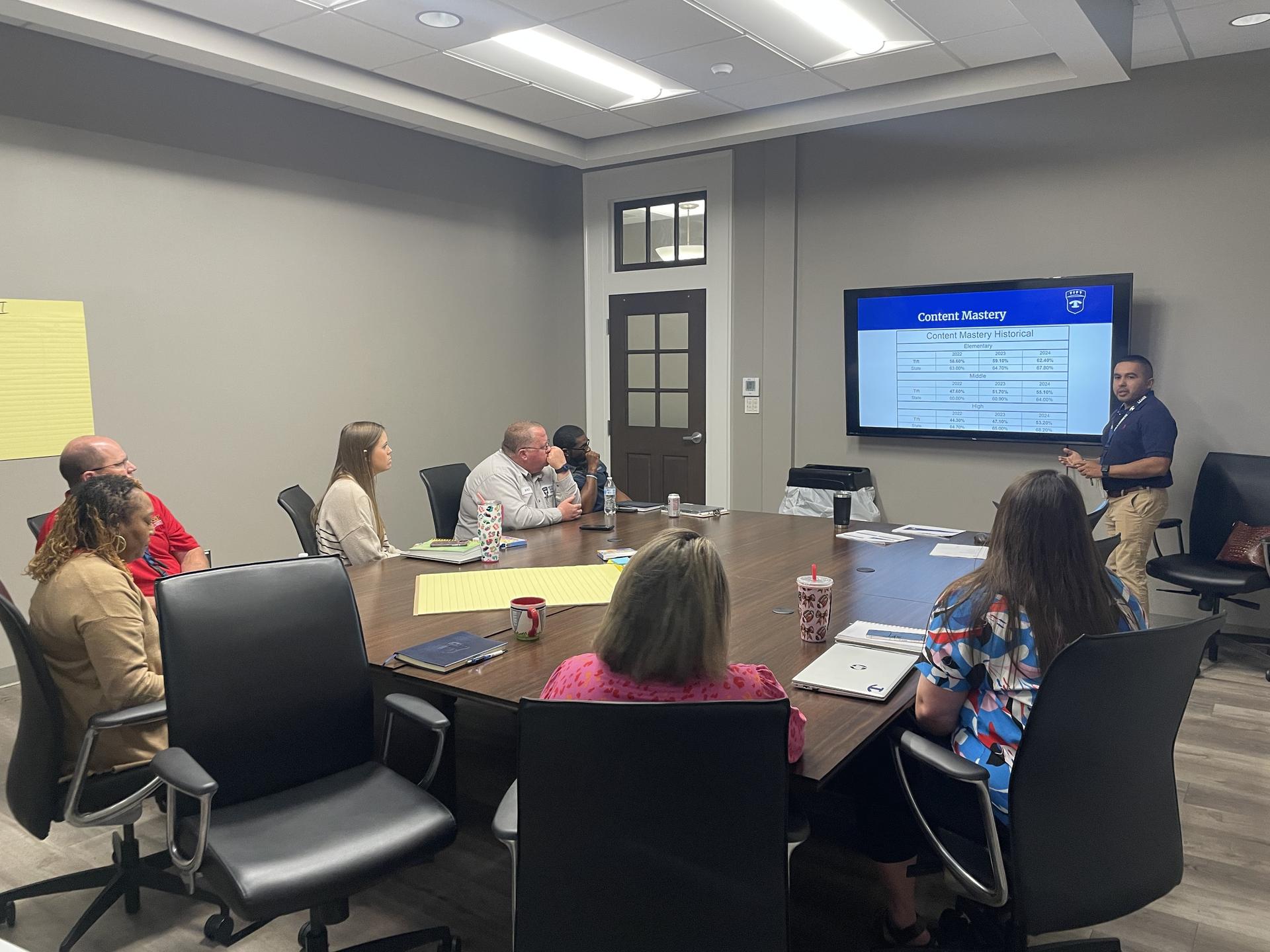
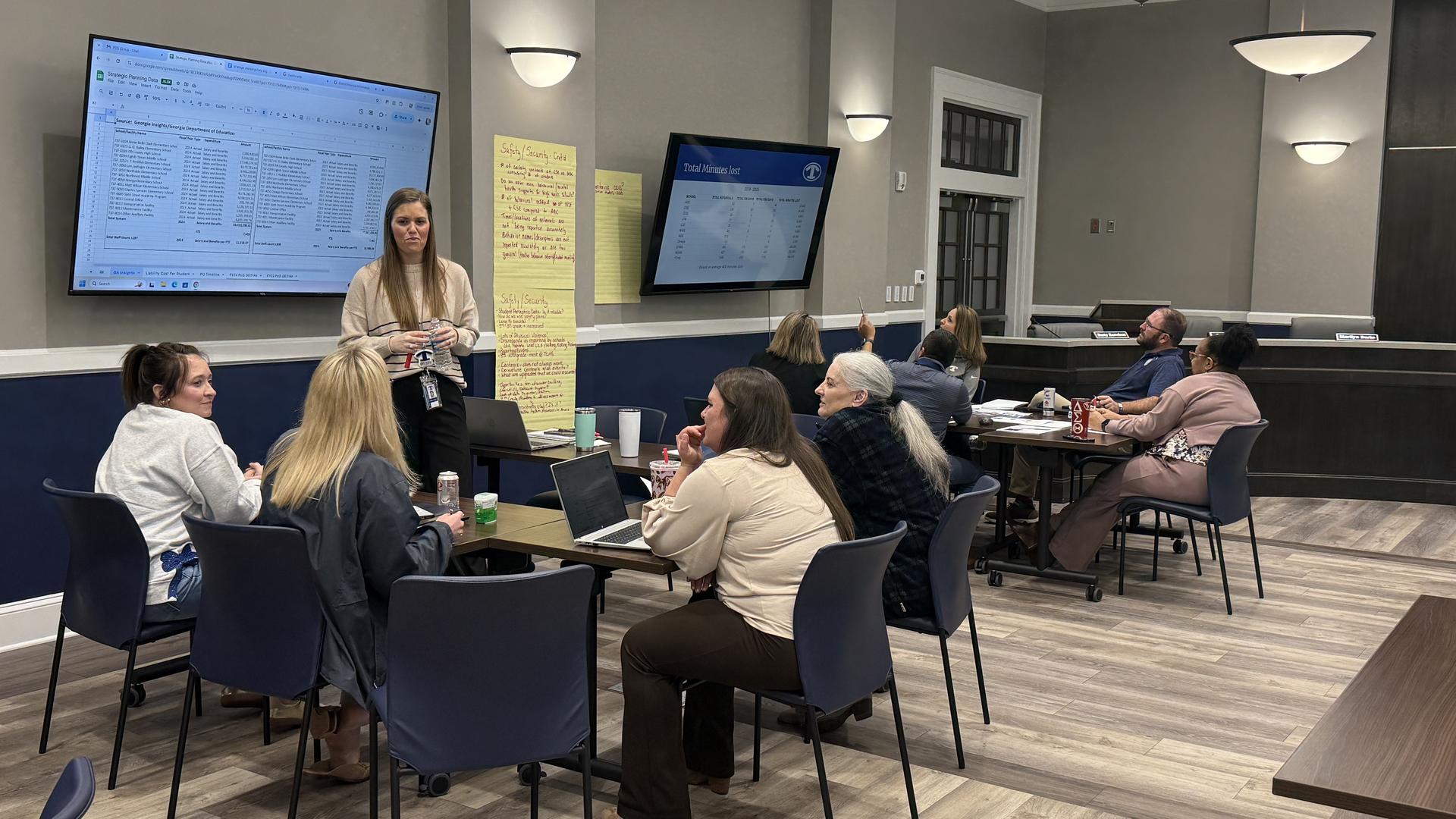
Following the initial community feedback, the focus shifted to a rigorous internal assessment through District Data Digs in the Winter of 2025. These deep-dive sessions involved district and school administrators critically analyzing data specific to two key functional areas: |
|
|
Operations: Reviewing metrics related to resource allocation, facility usage, transportation efficiency, and financial sustainability to identify logistical challenges and ensure efficient stewardship of public funds. |
|
Teaching & Learning: Scrutinizing key performance indicators (KPIs) such as student achievement trends, graduation rates, standardized test scores, and performance gaps among various student demographics. This data analysis was instrumental in pinpointing specific, data-driven systemic challenges within the instructional framework. |
|
|
Phase 3: Environmental Scan (Spring 2025) |
The Spring of 2025 marked the validation phase, combining internal review with external objective assessment: |
-
System Self-Assessment: District and School Leaders completed an intensive self-assessment, providing an honest, internal perspective on the current effectiveness of policies, programs, and leadership practices. This step offered valuable context for interpreting the quantitative data
|
|
|
- Cognia Stakeholder Surveys of Parents, Staff, and Students. These standardized surveys provided comparative data on school climate, instructional quality, and support services.
| | |
|
-
Cognia Classroom Observations: conducted across various grade levels and schools to gather specific, qualitative feedback directly on the learning environment, instructional engagement, and the practical application of curriculum
|
Phase 4: Synthesis and Plan Drafting (Summer 2025) |
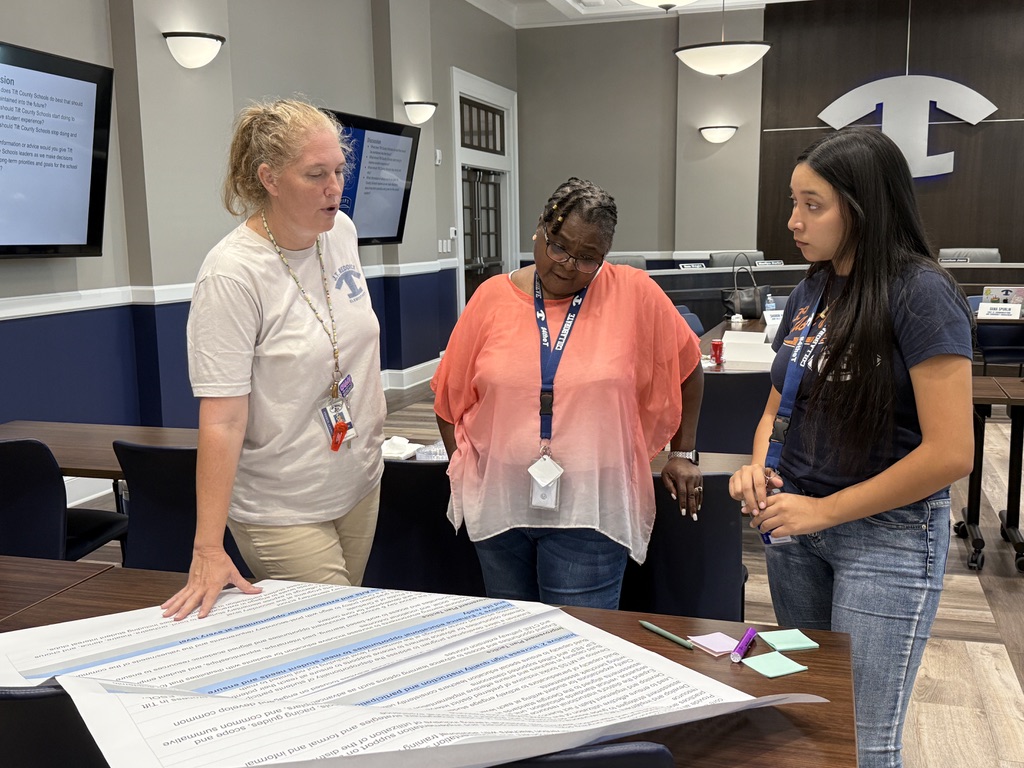
The comprehensive data collection culminated in the Summer of 2025. District Leaders undertook the massive task of organizing and synthesizing all collected information. This involved merging the qualitative feedback from surveys and observations with the quantitative data derived from the data digs and performance metrics. This synthesis process led to the identification of several overarching key themes that encapsulated the community's priorities, the system's challenges, and its greatest opportunities.
|
|
|
These foundational themes served as the bedrock for drafting the initial framework of the five-year plan, specifying the proposed Goals, Initiatives, and Tactics designed to guide Tift County Schools into the future. |
| |
|
Phase 5: Stakeholder Review for Final Input (Fall 2025) |
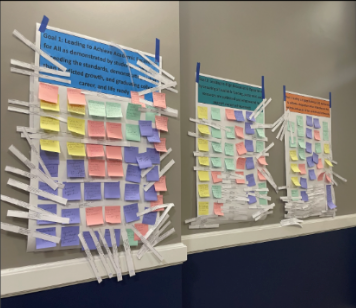
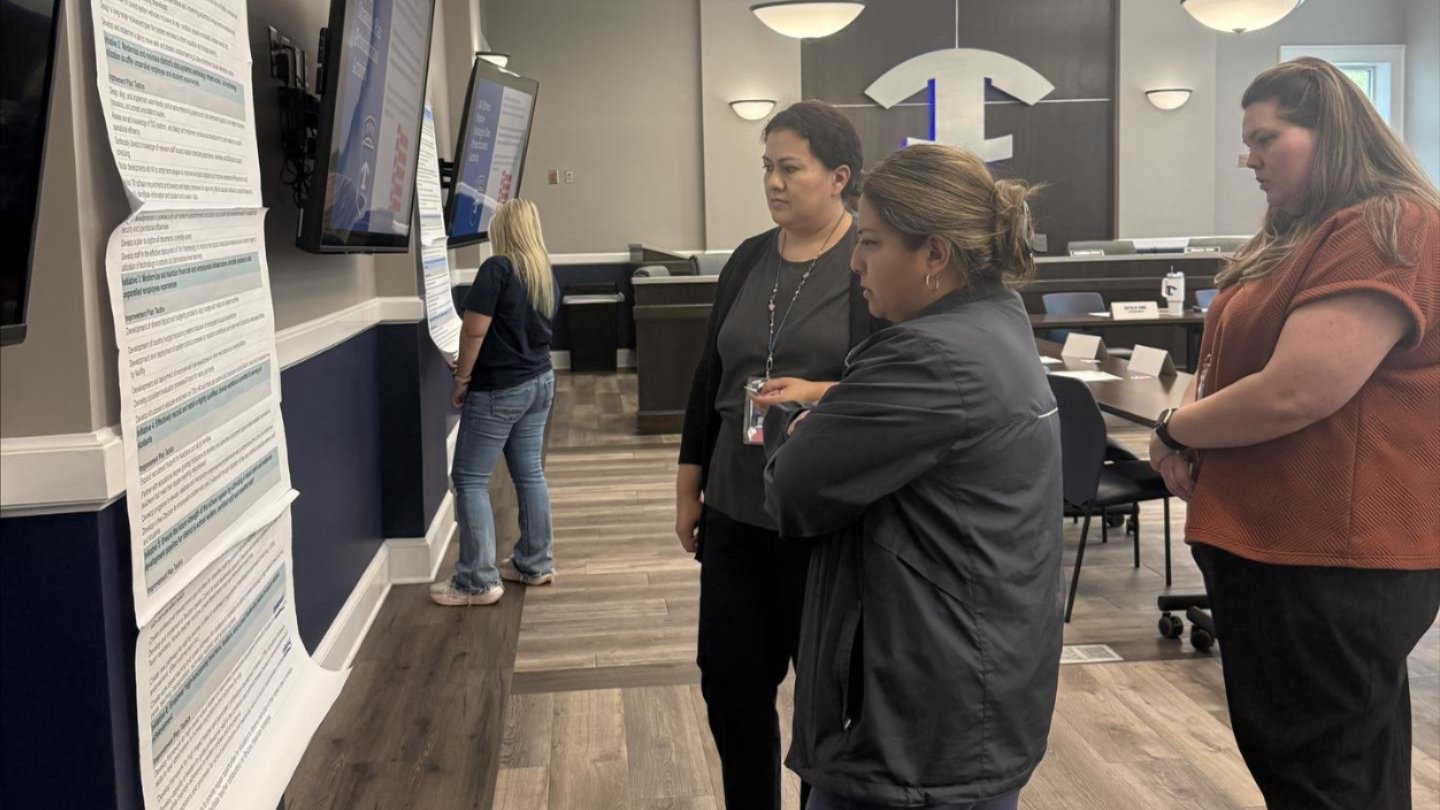
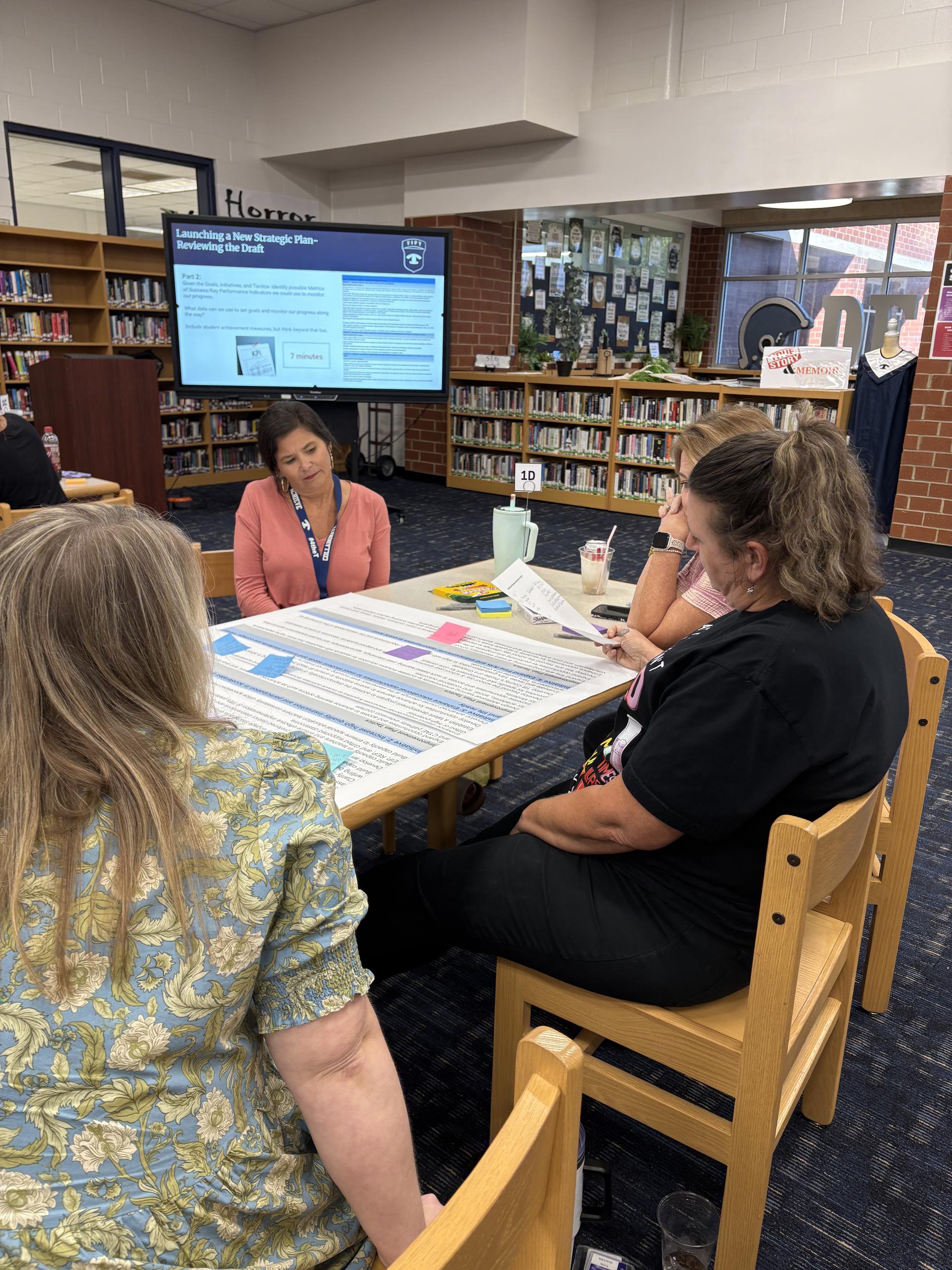
In the Fall of 2025, district leaders engaged every faculty, school LSGT, and Superintendent Advisories for a final review to identify needed areas of focus that are missing from the drafted plan. This input was compiled and the Goals, Initiatives, and Tactics went through a final modification process. |
|
|
Phase 6: Integration of Cognia Final Report recommendations |
|
|
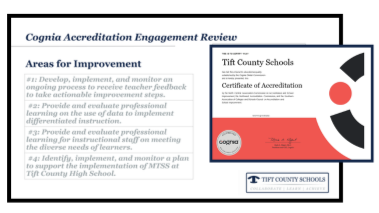
In October of 2025, system leaders received the Cognia final report which included 4 priority areas of focus for the organization. System leaders ensured those four areas were included in the strategic plan prior to release of the final version at the November 2025 Board Meeting. |
| |
|
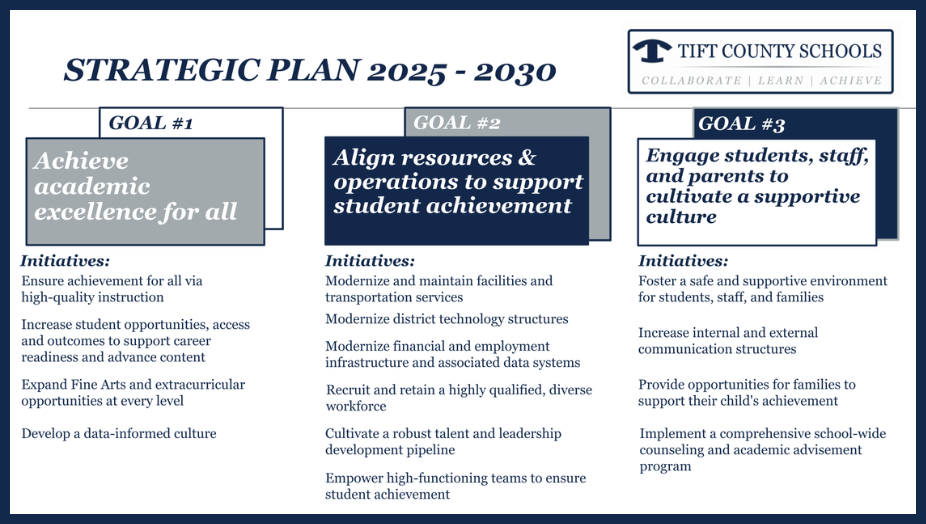
Tift County School’s Strategic Plan is organized around Goals, Initiatives and Tactics. Goals are the broad critical areas of focus; initiatives are the objectives that will lead to successful accomplishment of the goals; tactics are the specific actions required at the system and school level to advance the work and accomplish the initiatives and goals. Tift’s strategic plan has 3 Goals: |
Each Goal has aligned initiatives: |
And each initiative has aligned tactics that will contribute to the accomplishment of the initiatives. |
Goal 1: Leading to Achieve Academic Excellence for All |
- Initiative 1: Ensure high quality instruction to advance the academic achievement of all students
-
Provide all Pre-K- 12 teachers with ongoing professional development and implementation support on literacy instruction including additional training for intervention teachers and paraprofessionals inclusive of Science of Reading (Pre-K-3), Adolescent Literacy (4-12), Differentiating Instruction, Implementation of Interventions, and High Impact Writing Instruction.
-
Provide all K-12 teachers and paraprofessionals with ongoing professional development and implementation support on mathematics instruction specific to Implementation of Tift's Core and Intervention Resources, and Fact Fluency (K-5).
- Develop and implement Tift's instructional framework inclusive of Lesson Structure, Classroom Environment, Engagement Strategies, Assessment Strategies, and Adjusting Instruction for Reteaching and Remediation.
- Expand the district's instructional resource infrastructure to include: collaborative planning protocols, pacing guides, scope and sequence, vertical standards articulation, unit planning guides, exemplar lessons, student work exemplars, and common summative assessments aligned to the Georgia standards in core content & CTAE courses
-
Develop training and supports to Integrate GaMTSS processes and procedures into Tift Practices inclusive of data analysis practices, and instructional supports and practices for academics, behavior, and wellbeing for all.
- Build capacity in teachers and ensure effective implementation of Tift's preferred Co-teaching models in Special Education, ESOL, EIP, REP, and Gifted supported classrooms
-
Build capacity to ensure special education teachers consistently utilize specialized instructional strategies
- Initiative 2: Increase student opportunities, access and outcomes to support career readiness, accelerated and advanced content courses
-
Expand opportunities and access to advance learning options such as advanced placement, work-based learning, paid internships, apprenticeships, student employment and dual enrollment in both academic and CTAE pathway extension courses;
- Enhance district instructional resources & guides to include activities focused on engaging and accelerating students identified as Gifted or high-potential
-
Establish a talent development program to address the disproportionality of students participating in accelerated and advance coursework
- Design additional learning environments to respond to the needs of students with disabilities that foster higher expectations for academic, social, and vocational outcomes
- Align CTAE programming, CTSO, and programs of work to high demand careers
- Evaluate and revise Tift's graduation policy to align with post-secondary requirements and the values/needs of the community as articulated in Tift's profile of a Graduate and ensure every graduate has a linked in profile.
- Initiative 3: Expand Fine Arts and extracurricular opportunities at every level
- Expand fine arts programming at every every school level
- Enhance opportunities for students in all grade levels to engage in extracurricular activities including student interest clubs, volunteerism, and civic engagement and increase student participation in such programs
-
Develop beyond the school day & school year enrichment opportunities and aligned academic resources to ensure instruction provides for specific skill development for core content
- Initiative 4: Enhance the use of data to promote a district-wide culture of data-informed decision making
-
Design systems and processes to create a data-informed culture inclusive of data protocols and associated tools to guide data analysis process for various stakeholders including administrative teams, leadership teams, and teacher teams
- Conduct regular data review meetings to drive continuous improvement at schools and across the system
-
Develop a scope and sequence of school visits and supports focused on progress toward student achievement goals
|
Goal 2: Leading to Align Resources & Operations by ensuring all available funding, personnel, and resources are optimized to support student achievement |
-
Initiative 1: Modernize and maintain facilities and transportation services
- Create an inventory of current system vehicles, busses, equipment, supplies, and materials in fine arts, CTAE, athletic programs and weight rooms inclusive of the age and typical life span of items paired with a plan for annual replacement
-
Develop a long-range plan for facility utilization inclusive of an age and condition study of facilities, campuses and assets
- Develop and implement a plan to have safe and shaded play environments at each elementary school & outdoor learning environments K-8
- Create a comprehensive system for communicating expectations and monitoring outcomes to ensure cleaning service vendor compliance with contractual obligations
- Initiative 2: Modernize and maintain district data systems, technology infrastructure, and technology utilization
- Design, align, and implement user-friendly performance monitoring systems and data dashboards specific to the needs of teachers, counselors, and school and district leaders
- Assess use and knowledge of SIS platform, and design and implement professional development to build capacity to support operational efficiency
- Continuously develop knowledge of relevant staff around master scheduling approaches, timelines, and SIS tools to support scheduling
-
Establish Tift software requirements and develop and deploy processes for approving district acquired software to ensure the security of personally identifiable information and student and system data
- Monitor developments in artificial intelligence, cybersecurity and network advancements and deploy appropriate improvements needed to maintain data security and operational efficiencies
-
Develop a plan to digitize all documents currently stored
- Create a plan to modernize district utilization of emerging technologies including the adoption of AI to improve student and staff learning outcomes
- Initiative 3: Modernize and maintain financial and employment infrastructure and associated data systems
- Develop division/department budgeting process to align budget with needs and system priorities
- Develop monthly budget monitoring systems inclusive of anticipated vs actual expenditures
- Develop and deploy position control processes to maintain a continuously up-to-date record of positions allocated & filled by facility
- Develop and deploy employee exit interview/surveys to inform recruitment and retention efforts
- Develop consistent evaluation processes & tools for every job family
- Create a comprehensive system for communicating expectations and monitoring outcomes to ensure vendor compliance with contractual obligations
-
Develop structures to educate employees on Tift's HR and financial systems and processes including face to face and on-demand resources
- Initiative 4: Effectively recruit and retain a highly qualified, diverse workforce committed to serving all students
-
Improve recruitment of quality staff by expanding footprint and building employee recognition programs for teachers and all job families
- Partner with educational degree granting institutions to develop and advertise employment opportunities available for pre-service teachers that meet their student-teaching requirement
-
Develop a free Daycare for employee's children who are 3 years old through utilization of the early childhood education pathway staff and students
- Initiative 5: Cultivate a robust talent and leadership development pipeline for district & school leaders and certified & classified staff
-
Develop a Tiered Support Plan for Principals to provide focused support for novice principals, those new to the system, and those with data-identified needs
- Create professional development opportunities for classified staff to enhance skills and leadership
- Develop and Implement an Aspiring Leader Cohort to build leadership capacity of of the organization
-
Create new pathways for staff to become certified or endorsed in specialized classifications and areas of need (e.g., ESOL endorsement, Gifted endorsement, etc.)
- Create work-based learning and career pathways for students to transition to district careers focusing on high-demand areas such as paras, teaching, transportation, technology support, and school nutrition.
-
Initiative 6: Empower high-functioning teachers, leaders, and school leadership teams to ensure student achievement
- Develop framework for high impact school leader and associated professional development particularly focused on development of the skills to lead stakeholders to increase expectations and outcomes for kids
-
Develop framework for high impact teacher and associated professional development inclusive of Tift's instructional framework
- Develop capacity of leaders to guide professional staff in the continuous improvement process focused on learner experiences and needs while maintain adherence to system policies and procedures
-
Develop expectations, tools and processes for school administrative and leadership teams to monitor implementation of school initiatives to drive continuous improvement
- Build systems for schools to provide regular opportunities for educators to observe instruction in their content area to increase instructional alignment and facilitate teacher collaboration on effective classroom strategies
|
Goal 3: Leading to Engage Students, Staff, and Parents to cultivate a Supportive Culture that advances the wellness and success of our students and community |
-
Initiative 1: Enhance the well-being of students, staff, and families by fostering a safe and supportive environment
- Improve the continuum of behavior supports provided to elementary students through developing the capacity of school leaders, teachers, and paraprofessionals.
-
Utilize SSOs to support student success via mentoring, direct instruction, and intervention support of students
- Provide a continuum of mental and physical health services for staff, students and families at each school through staff direct support and community-based partnerships (Phase 1: Mental health grant; Phase 2: Physical Health/health standards).
-
Collaborate with community organizations and stakeholders to develop and implement comprehensive child welfare and attendance services to students, including tiered and differentiated absence prevention and intervention supports
- Build capacity of all student-facing staff on use of GaMTSS practices, restorative practices, and Trauma-Informed practices to promote a positive classroom culture.
-
Track advancements in safety and security, particularly regarding the use of School Security Officers (SSOs), and implement necessary enhancements to ensure robust security.
- Procure and deploy bus check-in / check-out system for accountability of student delivery and enhanced parent communication.
-
Initiative 2: Increase one-way and two-way communication opportunities between district & school leaders and relevant stakeholders
- Enhance internal communication structures to ensure all employees receive timely district news and important information
-
Increase the number of opportunities for staff to provide input at the school and system levels
- Increase opportunities for student leadership through school & system structures like LSGT student representatives, Principal Student Advisories at each school, student representative to the Board, Student Townhalls, etc
-
Develop an employee One-stop shop via secure website and/or intranet for access to district information and instructional resources
- Initiative 3: Enhance opportunities for families to access resources and parent education to support their child's experience and achievement
-
Enhance family engagement by offering Parent University sessions in multiple formats, expanding parent resources available on the system website, and expanding language supports and translations inclusive of ensuring district documents are accessible in English and Spanish
- Revise district report cards and associated grading policies and regulations to ensure parents can access and understand information to support their child's academic success
- Develop parent education workshops and resources designed for families with Birth-4 children providing "play to learn" experiences that support school readiness
- Work with community partners and local Pre-K providers to build a collective understanding of indicators of kindergarten readiness and standards-aligned instructional activities for Pre-K students
-
Initiative 4: Establish and implement a comprehensive school-wide counseling and academic advisement program inclusive of therapeutic intervention supports
- Develop consistent processes for communication with and guiding families for academic, post-secondary and career planning
-
Develop consistent processes for families to receive education and guidance on applying for and financing post-secondary educational opportunities
- Develop and implement an individual college and career plan, beginning in middle school grades 6-12, to monitor student progress and increase academic outcomes and opportunities for students after graduation
|
Measures of Success: Key Performance Indicators |
Tift County Schools’ Strategic Plan includes three broad Goals, consisting of distinct initiatives and tactics specifically designed and strategically implemented to improve district operations and student outcomes. In addition to the action steps articulated within this plan, this plan also includes articulation of how Tift County Schools will measure its success. Specifically, Tift’s Board of Education identified 22 Key Performance Indicators (KPIs) that will serve as measures of success. These KPIs will be used to monitor the progress and the impact of the work of the Strategic Plan over the next five years.
|
|
|
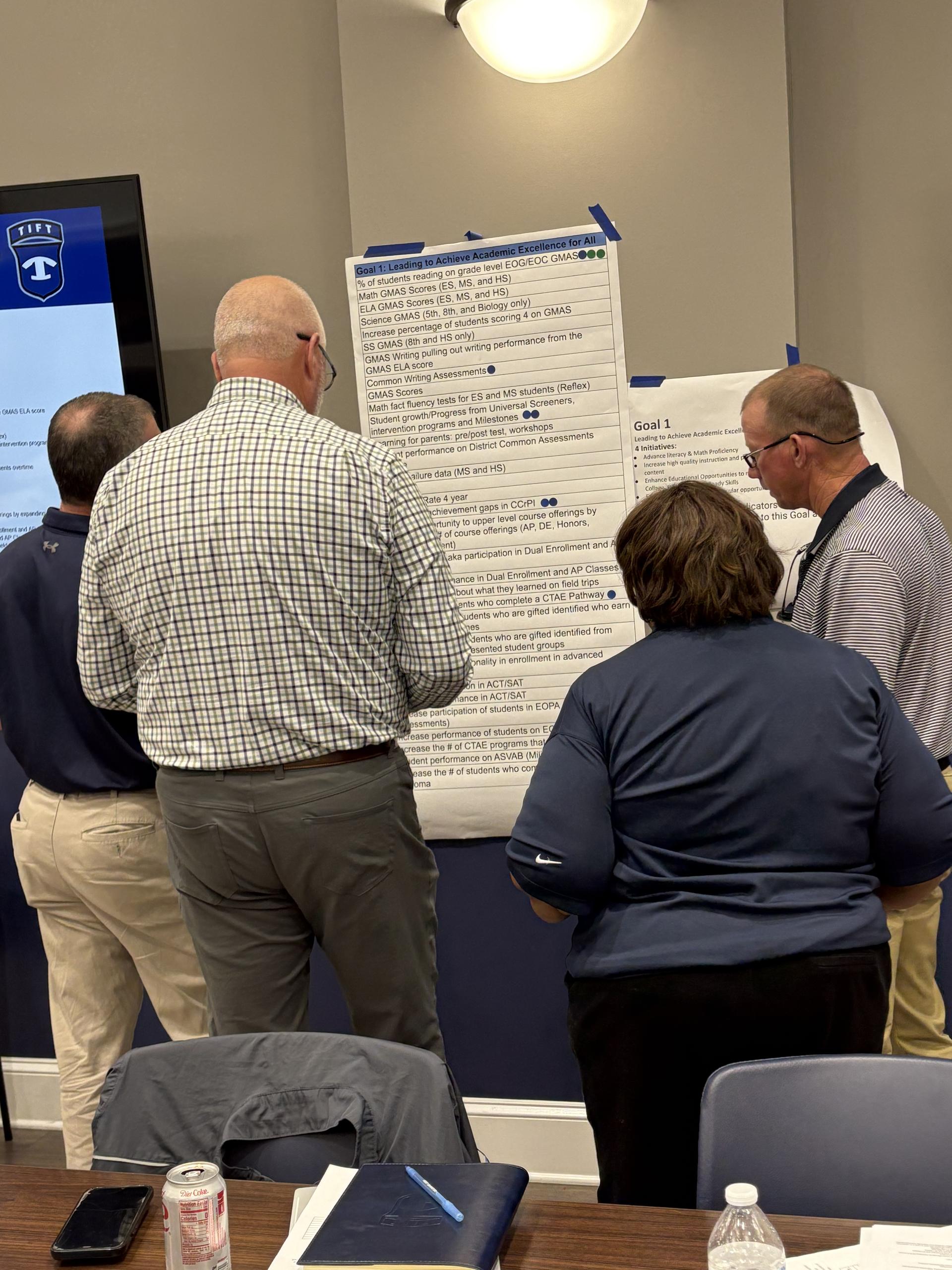
Both the Goals, Initiatives, and Tactics as well as the Key Performance Indicators emerged from the voice of the community during the Strategic Plan development process. District staff solicited the input of stakeholders including members of each school’s LSGT (Local School Governance Team), the faculty/staff at each school, as well as district and school leaders to identify possible metrics that could be used as the evidence of success for the Strategic Plan.
The Board of Education then examined the multitude of possible metrics and chose those that best aligned with the Goals, Initiatives and Tactics and were a priority for the Board. In all, there are 22 Key Performance Indicators (KPIs) that will be measured over the course of the next five years.
|
| |
|
Tift County School’s Key Performance Indicators for 2025-2030 |
-
% of students reading on grade level via EOG/EOC on Milestones
- Student Growth/Progress on Milestones (4-HS) & Universal Screeners (K-3)
- Decrease in Achievement Gaps on Milestones Performance
- Increase the % of students who complete a Pathway
-
Increase the % of students who are gifted identified from historically underrepresented student groups
- Improve student readiness for college and career
- Increase the # of CTAE programs in which students take an End of Pathway Assessment (EOPA)
- Increase correlation between student grades and EOC performance
-
Ratio of operating expenses to revenues
- Improve building cleanliness as measured by Staff perception
- Improve Staff sense of safety, belonging, and satisfaction as measured by staff perception
- Improve student safety, belonging, and satisfaction as measured by student perception
- Improve staff retention rates
- Increase the percentage of teaching staff with in-field certification
- Increase the percentage of staff with endorsements in system identified high-need areas
- Increase the % of work-based learning students place in jobs in state identified high demand areas
- Improve staff attendance
- Improve student attendance
- Increase frequency in which teachers receive high-quality feedback regarding instruction as measured by staff perception
- Increase the number of system professional development sessions with exit surveys about the PD
- Increase the # of clubs available at each school
- Increase student acceptance rate at 2-year and 4-year institutions
|
Once the specific metrics were chosen, district staff engaged in the process of identifying the data source for each metric, a calculation methodology for each metric, and will begin calculating baseline data for each metric where extant data are available. Further, work was done to align KPIs to the Tactics of the strategic plan.
District leaders will monitor and report on the KPIs that align to the tactics of focus for 2025-2026, adding KPIs each year as tactics that are designed to impact the KPIs are implemented. |
Leading A Culture of Continuous Improvement |
A strategic plan as ambitious as this plan requires the empowerment and leadership of many individuals across the organization who envision, drive, and execute the work outlined herein. It is understood that successful implementation cannot rest solely on the shoulders of a single leader or department. Rather, it demands distributed ownership, where multiple stakeholders are responsible for, and actively leading, distinct pieces of the overarching work.
When leadership is distributed across multiple individuals and teams, the development and rigorous implementation of a structured approach to the work becomes key to ensuring integrity of the work. A structured approach helps to drive effectiveness, minimize risk, and build consistency in execution.
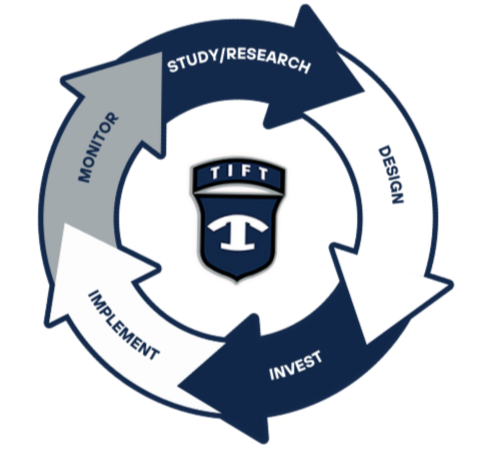
To this end, Tift County Schools developed the Phases of Implementation Process, a five-phase cycle, starting with study/research and concluding with ongoing monitoring for continuous improvement. Every Tactic will progress through the Phases of Implementation to include “research,” “design” and “implement” components. Some Tactics will also include an “invest” phase in which financial and/or human capital investments are obtained. Once a phase is “complete,” indicating it is fully implemented, Tift County Schools will continue to monitor the outcomes and make needed adjustments to maximize impact of the Tactic
|
Tift County School’s Phases of Implementation for Leading New System Initiatives |
1. Study/Research Phase
The process begins with the Study/Research Phase, which focuses on identifying a need, articulating a clear purpose or goal, and exploring possible solutions. The main objective is to gather relevant, evidence-based information to design a highly effective system or process. This involves activities such as establishing baseline data, soliciting stakeholder feedback, reviewing peer-reviewed literature, researching practices in comparable school districts, and meeting with vendors or experts. Upon completion, tactic owners must clearly articulate the purpose of the work, identify primary stakeholder groups, establish the tactic team, list research sources, and propose solutions for the next phase.
The Study/Research Phase mandates that work begins with research and data analysis to identify needs and solutions. This prevents teams from implementing solutions based on assumptions, ensuring a highly effective system is designed from the outset. 2. Design Phase
Building on the gathered research, the Design Phase involves applying that information to create a system, process, or product for improvement within TCS. This phase is critical for incorporating stakeholder input into the design, developing a detailed timeline, and creating a robust implementation plan. Key actions include achieving consensus on the solution, engaging in cycles of drafting and revision based on feedback, identifying potential barriers and solutions, and developing resources, tools, and a communication plan. The completion requirements ensure that tactic owners have solicited and incorporated stakeholder feedback, identified investment needs (training, staffing, resources), developed an implementation plan, and are "Implement-Ready" pending financial investment.
The Design Phase helps mitigate risks and barriers by requiring stakeholders' input and proactive identification of potential risks, a structured approach allows the team to address barriers before implementation begins. This significantly increases the likelihood of project success. 3.Invest Phase
The Invest Phase is dedicated to securing the financial resources necessary to support implementation. This includes, but is not limited to, funding for staffing, professional development/training, and the acquisition of materials or services from external vendors. The primary goal is to ensure all purchases and resource allocations align with TCS policies and practices, specifically Board Policy DJE. Completion requires that tactic owners ensure compliance with this policy and complete all purchases and training required for the initial implementation.
The Invest Phase holds the organization to compliance and resource readiness by ensuring that all financial decisions and resource acquisitions (staffing, training, materials) are compliant with internal policies (like TCS policy DJE) and that all necessary resources are secured before the work is rolled out. 4. Implement Phase
The Implementation Phase is the execution of the designed model. It may start with a pilot program at select sites or with select stakeholders to test the design before a scaled implementation across the district. The purpose is to put the tactic projects into practice in TCS. Actions include initiating the planned phased rollout, providing professional development and training, scaling the plan, and making minor revisions based on the initial rollout experience. Tactic owners complete this phase when the process, product, or plan is accessible to its intended stakeholders and actively "in use," and they are ready to begin (or are already using) a monitoring plan.
The Implementation phase manages the rollout and adoption of the new initiative. A structured implementation, often beginning with a pilot or phased rollout, allows the project to be tested and refined in a controlled environment. This prevents organization-wide disruption and supports a smooth transition as the plan is scaled across the district. 5. Monitor Phase
Following implementation, the Monitor Phase is an ongoing process supporting continuous improvement. This phase involves tracking progress, analyzing data to evaluate effectiveness, and identifying trends to make necessary adjustments. The purpose is to collect evidence-based information to evaluate the impact of the initiative. This includes ensuring fidelity of implementation, engaging in progress monitoring, measuring and analyzing outcomes, making data-driven adjustments, providing progress summaries, and soliciting feedback from stakeholders during and following implementation.
The Monitor Phase drives continuous improvement for the organization. The commitment to ongoing monitoring and data analysis ensures that the project's impact is continuously evaluated. This provides the necessary evidence to make informed adjustments and improvements, keeping the initiative relevant and effective long after the initial launch. |
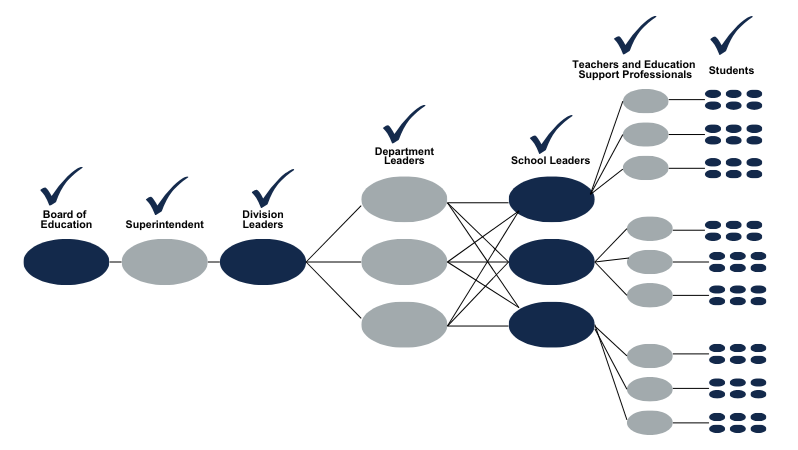
Organizational Alignment: From the Boardroom to the Classroom |
Full implementation of Tift County Schools' strategic vision requires alignment across all organizational levels, from the Boardroom to every classroom. |
The successful implementation of the Tift County Schools Strategic Plan 2025-2030 hinges on systematic alignment across the entire organization. This extends from the Boardroom, where governance and policy are established, through all administrative functions, and critically, into every classroom. This organizational synergy ensures that all decisions, resource allocations, professional development, and daily instructional practices directly support the Strategic Plan's overarching goals. Without this unified commitment and clear line of sight from vision to execution, the Plan's full potential cannot be realized.
To ensure alignment of the work across the organization, a systems approach is utilized that aligns the superintendent evaluation to the strategic plan action steps and KPIs; aligns the work and evaluation process of district leaders to the strategic plan action steps and KPIs; aligns school improvement plans and school leader evaluation processes to the strategic plan action steps and KPIs; and aligns classroom observations and teacher evaluations to the action steps of the strategic plan.
For district leaders, each tactic has a primary owner and co-owners who are responsible for developing and leading the work for the organization. Each co-owner develops an operational management plan (OMPs) that maps out the work to be completed for each tactic over the course of the year in a project management type of fashion. Tactic owners discuss progress consistently with their supervisor, and periodically report out to the district leadership team on progress, obstacles, and next steps to provide accountability and visibility into the work.
For school leaders, each school’s annual local school improvement plans will be developed aligned with the district-level Strategic Plan, while focusing on targeted needs of the individual school. Local school leaders, with support of the LSGTs (Local School Governance Teams), will review the school improvement plans periodically to ensure continual alignment with the district plan as local priorities are developed each year as guided by the Board of Education and the Superintendent. |
Strategic Plan Monitoring & Reporting |
Internally, Tift County Schools has developed several systems to consistently monitor Strategic Plan work. Annually, district leaders develop Operational Management Plans for the tactics of focus for the year, which map out the anticipated work associated with the tactic in a project management type of fashion. Tactic owners discuss progress consistently with their supervisor during weekly 1:1 meetings. Additionally, tactic owners periodically report out to the district leadership team. These updates provide the tactic owners with the opportunity to seek input into specific needs or current challenges associated with design and implementation, and for teams to receive ideas on how to connect, enhance or expand the work. This ensures district leaders stay abreast of and influence current work across the organization, rather than just within division, to facilitate cross-divisional coordination and ensure district goals and outcomes are realized.
Throughout the year, district leaders will utilize the monthly meetings of the Board of Education to provide the Board with informational updates on work occurring related to tactics of focus. Additionally, each Summer, the Board of Education will receive a report on the KPIs of focus for the year sharing baseline and current year data to monitor impact of the initiatives on the outcomes of focus.
These reports will be made publicly available both through Board meeting agendas and on the system website. |
Year 1 (2025-2026 School Year) Work |
Recognizing this plan represents five years of work for the organization, during the 2025-2026 school year, Tift County Schools will focus on the following Tactics: District leaders will monitor and report on the KPIs that align to the tactics of focus for 2025-2026, adding KPIs each year as tactics that are designed to impact the KPIs are implemented. |
Goal 1: Leading to Achieve Academic Excellence for All |
-
Initiative 1: Ensure high quality instruction to advance the academic achievement of all students
-
Provide all Pre-K- 12 teachers with ongoing professional development and implementation support on literacy instruction including additional training for intervention teachers and paraprofessionals inclusive of Science of Reading (Pre-K-3), Adolescent Literacy (4-12), Differentiating Instruction, Implementation of Interventions, and High Impact Writing Instruction
-
Provide all K-12 teachers and paraprofessionals with ongoing professional development and implementation support on mathematics instruction specific to Implementation of Tift's Core and Intervention Resources, and Fact Fluency (K-5)
- Develop and implement Tift's instructional framework inclusive of Lesson Structure, Classroom Environment, Engagement Strategies, Assessment Strategies, and Adjusting Instruction for Reteaching and Remediation
- Expand the district's instructional resource infrastructure to include: collaborative planning protocols, pacing guides, scope and sequence, vertical standards articulation, unit planning guides, exemplar lessons, student work exemplars, and common summative assessments aligned to the Georgia standards in core content & CTAE courses
-
Initiative 2: Increase student opportunities, access and outcomes to support career readiness, accelerated and advanced content courses
-
Expand opportunities and access to advance learning options such as advanced placement, work-based learning, paid internships, apprenticeships, student employment and dual enrollment in both academic and CTAE pathway extension courses
- Initiative 4: Enhance the use of data to promote a district-wide culture of data-informed decision making
- Conduct regular data review meetings to drive continuous improvement at schools and across the system
- Develop a scope and sequence of school visits focused on progress toward student achievement goals
|
Goal 2: Leading to Align Resources & Operations by ensuring all available funding, personnel, and resources are optimized to support student achievement |
-
Initiative 3: Modernize and maintain financial and employment infrastructure and associated data systems
- Development and deployment of position control processes to maintain a continuously up-to-date record of positions allocated & filled by facility
-
Create a comprehensive system for communicating expectations and monitoring outcomes to ensure vendor compliance with contractual obligations
- Initiative 4: Effectively recruit and retain a highly qualified, diverse workforce committed to serving all students
-
Improve recruitment of quality staff by expanding footprint and building employee recognition programs for teachers and all job families
- Initiative 6: Empower high-functioning teachers, leaders, and school leadership teams to ensure student achievement
-
Develop framework for high impact teacher and associated professional development inclusive of Tift's instructional framework
|
Goal 3: Leading to Engage Students, Staff, and Parents to cultivate a Supportive Culture that advances the wellness and success of our students and community |
-
Initiative 1: Enhance the well-being of students, staff, and families by fostering a safe and supportive environment
- Improve the continuum of behavior supports provided to elementary students through developing the capacity of school leaders, teachers, and paraprofessionals
-
Utilize SSOs to support student success via mentoring, direct instruction, and intervention support of students
- Provide a continuum of mental and physical health services for staff, students and families at each school through staff direct support and community-based partnerships (Phase 1: Mental health grant; Phase 2: Physical Health/health standards)
-
Initiative 2: Increase one-way and two-way communication opportunities between district & school leaders and relevant stakeholders
- Increase opportunities for student leadership through school & system structures like LSGT student representatives, Principal Student Advisories at each school, student representative to the Board, Student Townhalls, etc
- Develop an employee One-stop shop via secure website and/or intranet for access to district information and instructional resources
- Initiative 3: Enhance opportunities for families to access resources and parent education to support their child's experience and achievement
-
Develop parent education workshops and resources designed for families with Birth-4 children providing "play to learn" experiences that support school readiness
- Initiative 4: Establish and implement a comprehensive school-wide counseling and academic advisement program inclusive of therapeutic intervention supports
- Develop consistent processes for communication with and guiding families for academic, post-secondary and career planning
|
Tift County School’s Key Performance Indicators of Focus for 2025-2026 |
Specifically, there will be 10 KPIs monitored and reported on for the 2025-2026 school year: |
-
% of students reading on grade level via EOG/EOC on Milestones
- Student Growth/Progress on Milestones (4th-HS) & Universal Screeners (K-3rd)
- Decrease in Achievement Gaps on MIlestones Performance
- Increase correlation between student grades and EOC performance
- Ratio of operating expenses to revenue
-
Improve building cleanliness as measured by Staff perception
- Improve staff sense of safety, belonging, and satisfaction as measured by staff perception
- Improve student safety, belonging, and satisfaction as measured by student perception
- Increase frequency in which teachers receive high-quality feedback regarding instruction as measured by staff perception
- Increase the number of system professional development sessions where participants have the opportunity to provide feedback
|
The Tift County Schools would like to thank the many individuals who contributed to the development of Tift’s Strategic Plan, namely: |
-
The Community of Tift County, including our students, families, and employees who shared their feedback through the numerous surveys and feedback opportunities that occurred throughout this plan’s development.
- The Board of Education, who sets the direction for Tift County Schools through the establishment of their Core Beliefs and selection of the Key Performance Indicators that will be measures of our success over the next five years.
- The members of each school’s LSGT (Local School Governance Team), who provided review and feedback on a draft of the strategic plan, and offered ideas on additional initiatives and/or tactics to be considered for inclusion in the plan.
- The members of the 2025-2026 Teacher and Staff Superintendent Advisories, who helped to prioritize the tactics included in the final version of the strategic plan.
- The Core Design Team consists of district leaders, who drafted the Goals, Initiatives, and Tactics based upon a synthesis of all the data received, and evaluated recommendations on prioritization to develop a final version that is ambitious yet attainable.
|
ACCESS - Assessing Comprehension and Communication in English State-to-State (Test for English Learners) AP - Advanced Placement CCRPI - College and Career Ready Performance Index (state accountability system) CEP - Community Eligibility Provision CTAE - Career, Technical and Agricultural Education EAP - Employee Assistance Program
EIP - Early Intervention Program ELL - English Language Learner EOC - End of Course (State Assessment) EOG - End of Grade (State Assessment) EOPA - End of Pathway Assessment ESOL - English for Speakers of Other Languages FTE - Full Time Equivalent
Ga Decal-Georgia Department of Early Care and Learning (Prek) GADOE-Georgia Department of Education GA LEADS - Georgia Leader and Education Acceleration and Development System GaMTSS - Georgia Multi-Tiered System of Supports GKIDS - GA Kindergarten Inventory of Developing Skills GMAS - Georgia Milestones Assessment System GOSA - Governor’s Office of Student Achievement IDEA - Individuals with Disabilities Act IEP - Individualized Education Program KPI - Key Performance Indicators LEA - Local Education Agency MTSS - Multi-tiered System of Supports PBIS - Positive Behavioral Interventions and Supports PLC - Professional Learning Community REP - Remedial Education Program RTI - Response to Intervention SBOE-State Board of Education SGP-Student Growth Percentile SIS - Student Information System SPED - Special Education E-SPLOST - Special Purpose Local Option Sales Tax (Sometimes shortened to SPLOST) SRO - School Resource Officer SSO - System Security Officer SWD-Students with Disabilities |
|
|
|